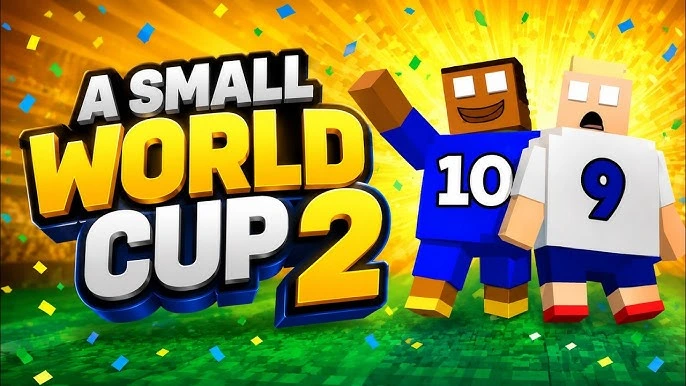
A Small World Cup 2 Guide: Physics Soccer That Rewards Timing
A Small World Cup 2 is a compact arcade football game where the fun comes from reading angles, launch power, rebounds, and panic recoveries. The match looks simple at first: drag a tiny player, release, hit the ball, and score. After a few rounds, the real pattern becomes clearer. The best players are not the ones who always launch hardest. They are the ones who control space after the shot.
This page combines the embedded game with our notes on how the mechanics behave in practice. Use it as a short field manual before you jump into a cup run, local multiplayer session, or quick practice match.
What Is A Small World Cup 2?
A Small World Cup 2 is an HTML5 football game inspired by international cup competitions, skill-based shooting mechanics, and short competitive soccer duels. Each match is built around drag-and-release movement, quick scoring opportunities, and lively physics that create unexpected goals, saves, and rebounds.
The game keeps the energy of a World Cup run while stripping away the complexity of a full sim. You get colorful visuals, responsive controls, and replayable action where one clever launch can completely change the scoreboard.
Unlike a normal football game, you are not controlling an entire team with passing patterns and tactical menus. You are controlling momentum. That makes the game closer to a physics puzzle with football stakes: find the angle, predict the bounce, and make sure your player does not leave the goal exposed after the attack.
How To Play A Small World Cup 2
The basic rules are simple:
- Drag to set direction and power.
- Release to launch your player toward the ball.
- Score more goals than your opponent before the timer runs out.
- React quickly on defense when possession changes.
- Use rebounds, angles, and positioning to create better attacks.
Most matches last around one hundred seconds, so decisions matter right away. Because the game uses physics-based movement, precision is usually stronger than pure force. A patient shot into space often works better than a wild launch from a bad angle.
The control rhythm is important. Pull too far and your player can overshoot the ball, opening a counterattack. Pull too lightly and you may leave the ball loose in midfield. Good shots usually start with a short pause: check where the opponent sits, imagine the first bounce, then release.
Gameplay Overview
Every match in A Small World Cup 2 is a compact contest built around shooting accuracy, quick reactions, and smart movement. Your goal is to send the ball into the opponent net while staying ready for fast counterattacks. Since the field is small and the action is immediate, each launch can create either a clean finish or a dangerous turnover.
Different difficulty levels make it easier to learn the pace before stepping into tougher tournament matches. That progression helps casual players settle in while still giving competitive players room to sharpen their timing and field awareness.
One useful habit is to treat every launch as both an attack and a defensive decision. If the ball is near the side wall, an angled tap may be safer than a direct shot. If your player is the last body between the opponent and the goal, a reckless lunge can turn into an instant concession. The game feels chaotic, but many goals come from predictable overcommitment.
Tournaments, Teams, And Player Packs
A Small World Cup 2 keeps things fresh with several tournament paths, including cups inspired by World Cup 2026, Europe Cup, Universal Cup, and America Cup. Each cup offers a different route to the trophy while keeping the same fast, skill-based football structure.
Winning matches rewards you with coins, and those coins can be spent on player packs that expand your squad options. Base Packs, Rare Packs, and Top Packs introduce progression variety and give you reasons to keep playing beyond a single tournament run. National teams such as Argentina, Spain, USA, Ecuador, and Sweden are part of the available pool, with more teams unlocked over time.
Our recommendation is to use early coins for breadth instead of chasing one perfect team immediately. More playable options help you learn different movement speeds and recovery styles. A team that feels slightly weaker on paper can still win if its movement suits your timing.
Shot Types We Use Most
These are the shot patterns that tend to matter more than button-mashing:
- Low-power nudges: useful when the ball is already close to goal and you only need to redirect it.
- Wall rebounds: strong when the direct lane is blocked, especially from tight side angles.
- Delayed counters: wait half a beat for the opponent to move, then launch into the newly open lane.
- Defensive clears: not every launch should aim at goal. Sometimes the best play is moving the ball away from the box.
- Body blocks: after shooting, your player can still interfere with the opponent’s next line. Think about where you will land.
If you keep conceding immediately after attacks, your problem is probably not aim. It is recovery. Try using less power for a few matches and focus on where your player ends up after contact.
Why A Small World Cup 2 Stays Fun
What makes A Small World Cup 2 stand out is the mix of simple controls and unpredictable match flow. You can understand the controls in seconds, but mastering rebounds, defensive recovery, and well-timed launches takes real practice. That keeps the game accessible for new players while still rewarding better decision-making.
It also works especially well for short browser sessions. Fast rounds encourage instant rematches, Practice Mode helps improve technique, Golden Goal adds pressure, and local multiplayer creates hilarious head-to-head moments that feel great with a friend on the same device.
Best Tips To Win More Matches
These habits usually lead to better results:
- Focus on angle before power.
- Avoid launching blindly from crowded positions.
- Use walls and rebounds when the direct lane is blocked.
- Recover your defensive position after every attack.
- Stay patient when the ball is loose in front of goal.
- Adjust launch power instead of always aiming for maximum force.
Steady choices often beat constant aggression. Reading the field one bounce ahead creates cleaner scoring chances, and patience helps you avoid the easy mistakes that decide close tournament matches.
Mistakes That Cost Easy Goals
The most common losses usually come from repeatable habits:
- launching at full power from your own goal area
- chasing the ball into the corner without a recovery angle
- shooting through traffic instead of using the wall
- ignoring the opponent’s body position
- trying to score from every touch
- leaving the center lane open after a missed shot
The fix is boring but effective: slow the game down for two or three matches. Aim for clean contact, return to a defensive line after each attack, and accept smaller chances. Once you stop giving away open counters, the scoreboard becomes much easier to control.
Controls
The controls are part of what makes A Small World Cup 2 easy to pick up:
Desktop
- Mouse drag and release: aim and shoot the player
WASD: first player movement in local multiplayer- Arrow keys: second player controls in local multiplayer
Mobile
- Touchscreen swipes: aim and shoot the player
Mobile play rewards shorter gestures. Long swipes can be harder to aim precisely on a small screen, so use compact pulls and focus on the first bounce. Desktop players often improve faster because the mouse gives a clearer power range, but mobile is still very playable once you reduce overpowered launches.
Features That Keep Every Match Fresh
A Small World Cup 2 stays fun because it combines simple inputs with a lot of variation:
- Physics-based gameplay creates surprising goals and saves.
- Fast rounds encourage instant rematches.
- Coins and player packs support longer-term progression.
- Multiple cups and modes improve replay value.
- Local multiplayer adds a strong party-game feel.
Game Modes At A Glance
- Practice Mode: learn shot power, bounce angles, and timing without tournament pressure.
- Tournament Mode: advance through brackets and chase championship glory.
- Golden Goal: one perfect finish can decide the entire match.
- Local Multiplayer: challenge a friend with separate controls on the same screen.
Who Should Try It
A Small World Cup 2 is a good fit if you enjoy sports games that feel immediate rather than managerial. It is closer to a tabletop football duel than a full simulation. Players who like short rounds, physical comedy, lucky rebounds, and skillful rematches will probably enjoy it more than players looking for licensed squads, realistic formations, or deep career progression.
For a different kind of football challenge, use Sete a Zero when you want squad-building and World Cup memory instead of arcade physics.
A Small World Cup 2 FAQ
Is A Small World Cup 2 free to play?
Yes. You can play A Small World Cup 2 online for free in your browser.
What kind of game is A Small World Cup 2?
It is a small-scale arcade football game with playful physics, tournament progression, unlockable teams, and fast replayable matches.
Do I need to install anything?
No. The game runs directly in the browser on this page.
Can I play on mobile?
Yes. The game is built with HTML5 for browser play on desktop, tablet, and mobile devices.
Does A Small World Cup 2 have multiplayer?
Yes. Local multiplayer lets two players compete directly using separate controls on the same device.
What platforms support A Small World Cup 2?
The game runs in the browser on desktop, tablet, and mobile devices.
Start a match, line up the shot, and see whether your tiny national team can lift the trophy.
More Soccer Games
If you enjoy playful football challenges, try Free Kick 2026, World Cup 2026 Soccer Game, or Penalty Shooters 3.
This page is an independent game guide and embed hub. seteazero.org is not the official publisher, owner, or operator of the game shown in this frame unless a page explicitly says so. Game names, trademarks, and media remain the property of their respective owners.