Sete a Zero Guide: Build Better World Cup Draft Lineups
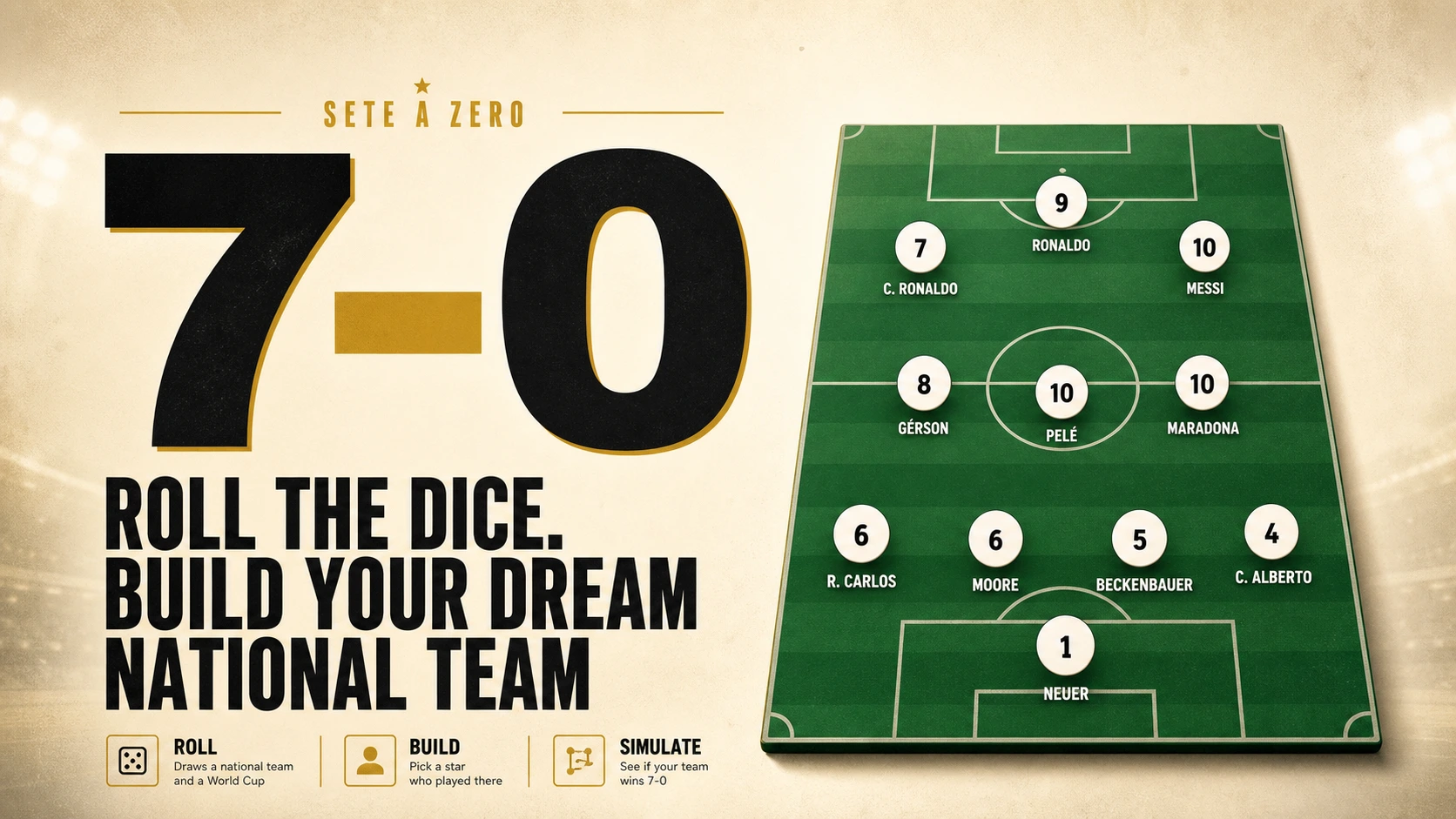
Sete a Zero is best understood as a compact football-history draft challenge. The game gives you a country and a World Cup edition, then asks you to build a lineup that is both historically valid and strong enough for an exaggerated 7-0 result. This page is our practical guide to that loop: how to read the draw, how to avoid wrong-era picks, and how to build a squad that makes sense instead of simply stacking famous names.
We cover the game because it sits at the intersection of browser games and real tournament knowledge. The embedded game is useful for playing a quick round, but the original value of this page is the draft advice, player-selection framework, and World Cup context around the challenge.
What The Challenge Actually Tests
The hardest part is not naming great players. The hard part is filtering your memory through one specific tournament. Brazil 2002, France 1998, Spain 2010, Argentina 2022, and Germany 2014 all suggest obvious stars, but a strong draft still needs correct positions, defensive balance, and a goalkeeper who fits the exact year.
The history side of the challenge matters because the official FIFA World Cup archive documents each tournament era and helps explain why the rolled year changes which players count as valid picks. FIFA’s classic tournament section is also useful background if you want to understand how squads, stars, and national teams changed across generations.
How To Play
Each round follows the same structure:
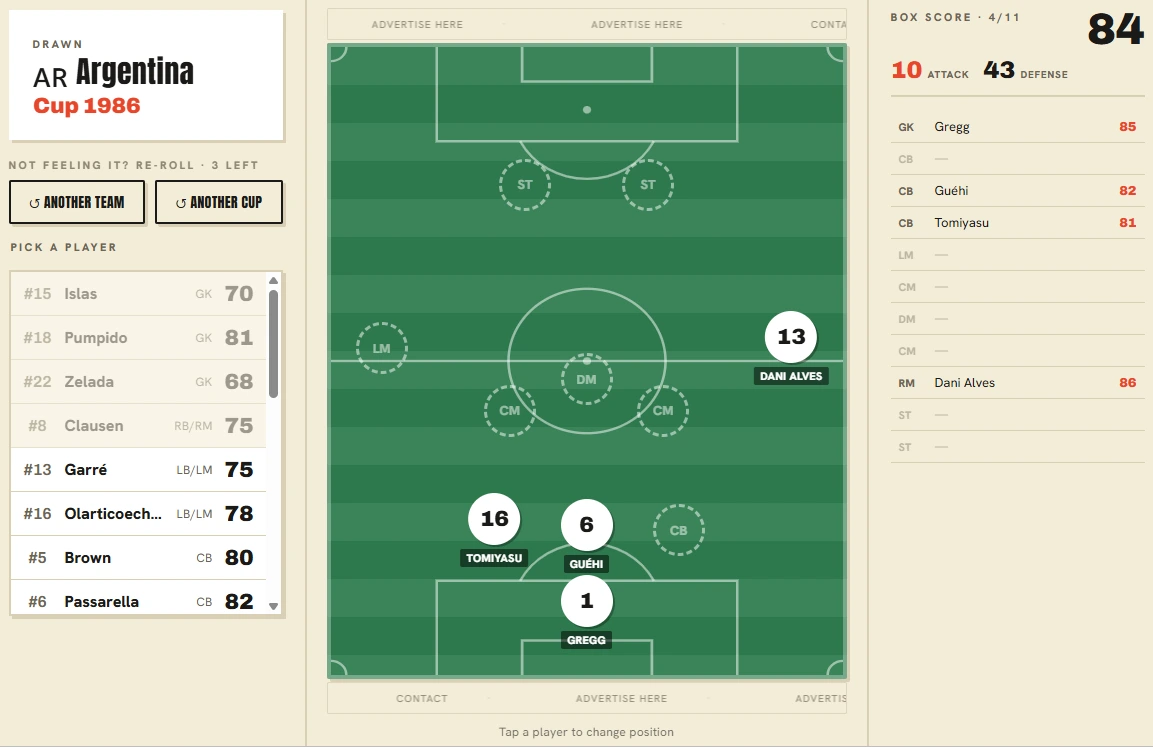
- Roll a national team.
- Roll a specific World Cup year.
- Pick one player for each position on the pitch.
- Use only players who represented that country in that tournament.
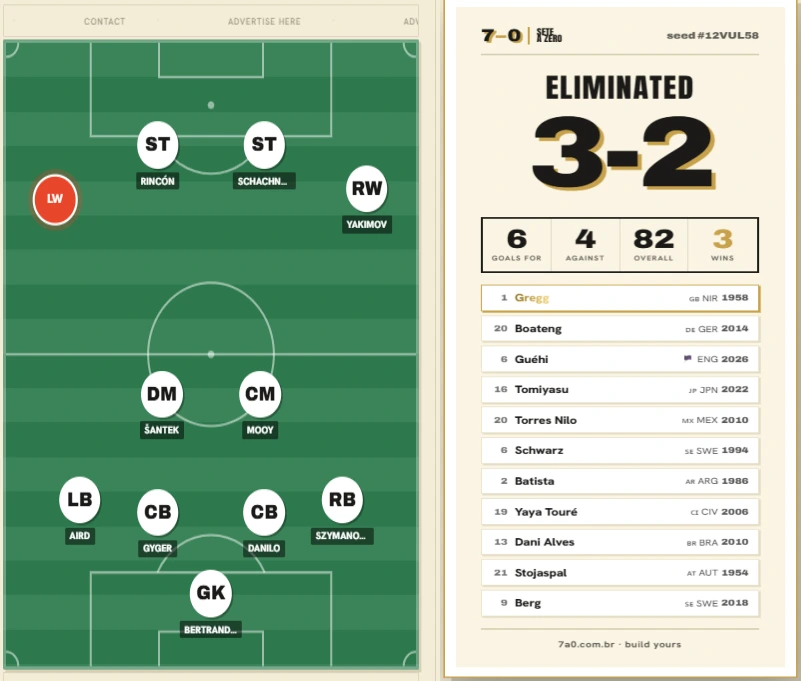
- Complete the eleven and run the simulation.
If your football memory is sharp and your squad makes sense, you have a chance to hit the signature result: a 7-0 win.
You do not need a complicated control scheme here. Most of the experience is about reading the draw, thinking through the squad, and making the right selections on each position. That makes the game easy to start, but surprisingly hard to master.
Draft Method: Solve The Constraints First
The safest approach is to solve the constraints before chasing the headline player. Start with the year. Ask which formation and squad shape defined that national team. Then lock the most fragile roles first: goalkeeper, center-back, defensive midfield, and full-back. Attackers are easier to remember, but defensive slots are where many drafts become historically invalid.
For example, a Brazil roll can tempt you toward Pele, Romario, Ronaldo, Ronaldinho, Neymar, and Kaka at the same time. That memory is useful, but it becomes dangerous if you ignore tournament years. A 1970 Brazil draw and a 2002 Brazil draw are completely different puzzles. Treating them as one generic Brazil pool is the fastest way to build a flashy but invalid team.
A Simple Pick Order
When we test Sete a Zero rounds, this pick order usually produces cleaner lineups:
- Goalkeeper first when the tournament has a clear elite keeper, such as Neuer 2014, Buffon 2006, Casillas 2010, or Dida 2002.
- Center-backs before luxury attackers because weak central defense can ruin an otherwise brilliant draft.
- One control midfielder before the final attacking slot. Xavi, Busquets, Modric, Zidane, Pirlo, and similar profiles often stabilize the simulation.
- Forwards last unless the fit is undeniable, because famous forwards are easier to remember after the rest of the XI has structure.
This order is not a rigid rule. It is a guardrail against the most common mistake: building a front-loaded team that looks fun but cannot survive the final evaluation.
What You Are Really Trying To Do
At a glance, the task looks like simple football trivia. In practice, the challenge is more specific:
- remember who made each World Cup squad
- match the right player to the right position
- avoid choosing stars from the wrong tournament cycle
- finish with a lineup that still feels balanced enough to earn the 7-0 result
That is why Sete a Zero stays interesting after the first few attempts. You are not just naming famous players. You are building a historically valid answer under pressure.
A Better Way To Build Your Team
A few habits make a big difference when you play:
- Start with the World Cup year before thinking about famous names.
- Check whether a legend played that edition, not just the tournament in general.
- Balance the whole lineup instead of spending all your attention on forwards.
- Respect the positions, because obvious names in the wrong role can ruin a good draft.
Pele, Maradona, Ronaldo, Messi, and Cristiano Ronaldo will come to mind quickly. The harder part is knowing when they really fit the draw you rolled.
Another good habit is to solve the obvious positions first. If you know the goalkeeper or a classic defender immediately, lock those in before overthinking the attack. Many failed runs come from chasing glamorous names too early.
Historical Examples That Teach Better Drafting
Some tournament years are useful teaching cases:
- Brazil 1970: the attack is legendary, but the midfield and full-back choices matter because the team was not just a list of forwards.
- Argentina 1986: Maradona is the obvious engine, yet the supporting structure decides whether the lineup feels balanced.
- France 1998: Zidane is central, but the defense and goalkeeper are the foundation of the run.
- Spain 2010: possession control is the point. A draft that skips midfield balance misses why that team worked.
- Germany 2014: Neuer, Lahm, Kroos, Muller, and the defensive shape create more value together than any single name in isolation.
Use these examples to train your eye. A good draft asks, “Why did this team work in that tournament?” before it asks, “Who is the most famous player here?”
What Makes This Challenge Different
Many football games ask you to build fantasy teams with no historical limits. Sete a Zero does the opposite. It keeps the challenge grounded in real World Cup squads, which gives every correct pick a satisfying little hit of recognition.
It is also ideal for short sessions:
- open the page
- build the team
- run the result
- try again with a different country and year
That quick loop is a big reason why the game spreads easily across social posts, group chats, and football communities before major tournaments.
Common Mistakes Players Make
Even experienced football fans miss runs for predictable reasons:
- choosing a legend who played for the nation, but not in that World Cup
- forcing an all-attack lineup with weak balance elsewhere
- confusing different versions of the same player’s career
- ignoring less glamorous but correct squad members
Because the game is based on real tournament participation, accuracy matters more than reputation. Sometimes the right answer is not the biggest name.
If you want to double-check whether a superstar actually belongs to the rolled edition, it helps to compare your memory against an official tournament archive rather than a generic highlights list. That small habit makes Sete a Zero feel closer to a football history puzzle than a normal fantasy lineup game.
Use Our Player Board As A Companion
Our Player Tier List expands the draft logic into tiers, roles, best tournament years, and risk notes. It is not meant to declare the greatest footballers ever. It is a working board for this specific challenge, where a correct B-tier full-back can be more valuable than a famous attacker who does not match the rolled year.
The most useful way to use that page is after one or two failed attempts. Write down the position that caused trouble, then check the tier board for a safer profile. Over time, you will start remembering squads by structure: goalkeeper, back line, midfield controller, creator, scorer. That memory pattern is much more reliable than recalling highlight reels.
Who Will Enjoy 7a0 - Sete a Zero
This page is a great fit for several kinds of players:
- World Cup fans who love testing memory
- football history nerds who know squads by era
- casual fans who want a quick browser challenge
- friends comparing answers before or during a major tournament
That broad appeal helps explain why the game spreads so easily around big football moments. The format is quick enough for anyone to try, but deep enough to reward serious knowledge.
See Whether Your Team Can Reach 7-0
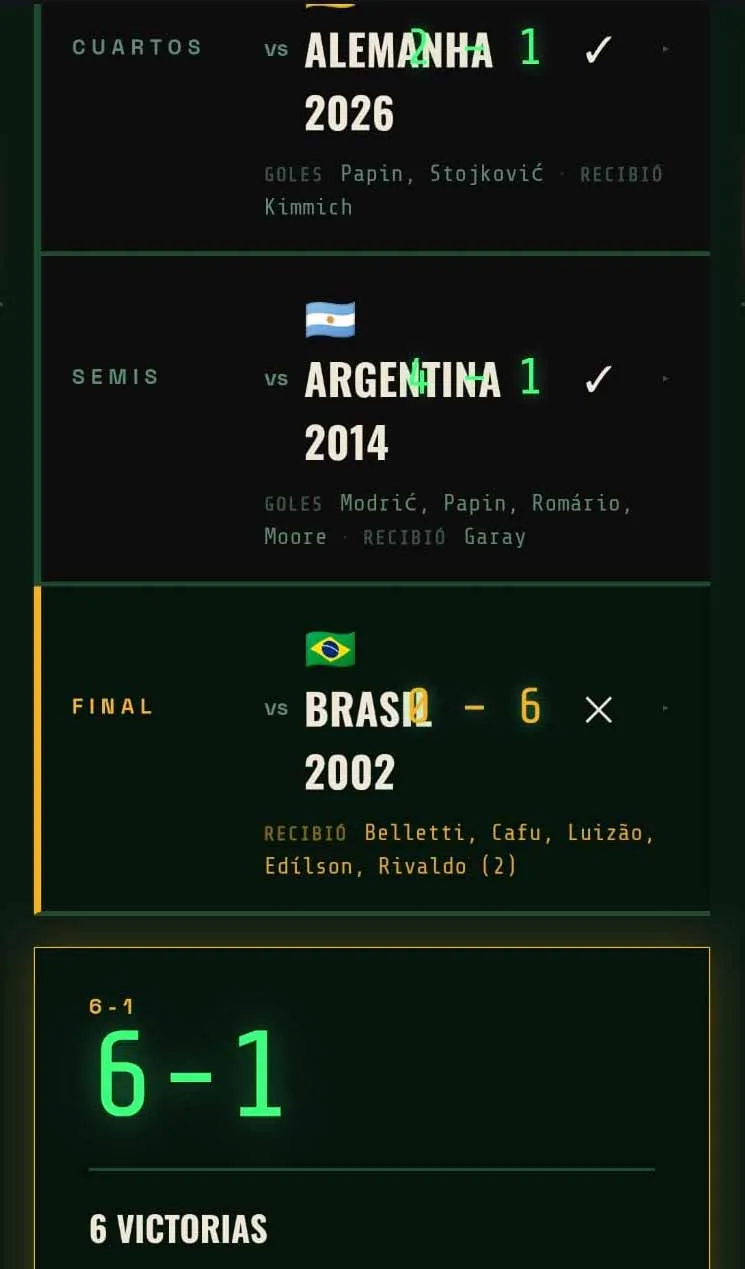
Part of the fun in 7a0 - Sete a Zero is seeing how the final simulation judges your choices. Some lineups look perfect on paper and still fall short. Others sneak into a huge result because the squad is balanced and historically accurate.
Editorial Notes And Affiliation
seteazero.org is an independent fan-made guide and browser-game hub. We are not FIFA, we are not affiliated with the FIFA World Cup, and we do not claim ownership of third-party game titles or media shown through embedded frames. Our added value is the written guide content, comparison pages, player-pick notes, and site organization around football browser games.
More About This Site
For site details, policies, or contact information, you can also visit About Us, Contact Us, Terms of Service, and Privacy Policy.
Recommended Resource
arwf.orgThis page is an independent game guide and embed hub. seteazero.org is not the official publisher, owner, or operator of the game shown in this frame unless a page explicitly says so. Game names, trademarks, and media remain the property of their respective owners.